Amazon Associates is the affiliate programme almost everyone has heard of. It’s free to join, almost every reader already trusts Amazon, and you can link to almost anything. But the commission rates are modest and the rules are strict, so it works best when you understand exactly how it pays.
How Amazon affiliate links work
When you join, Amazon gives you a unique tag. Any Amazon link with your tag tracks who sent the shopper.
The key rules:
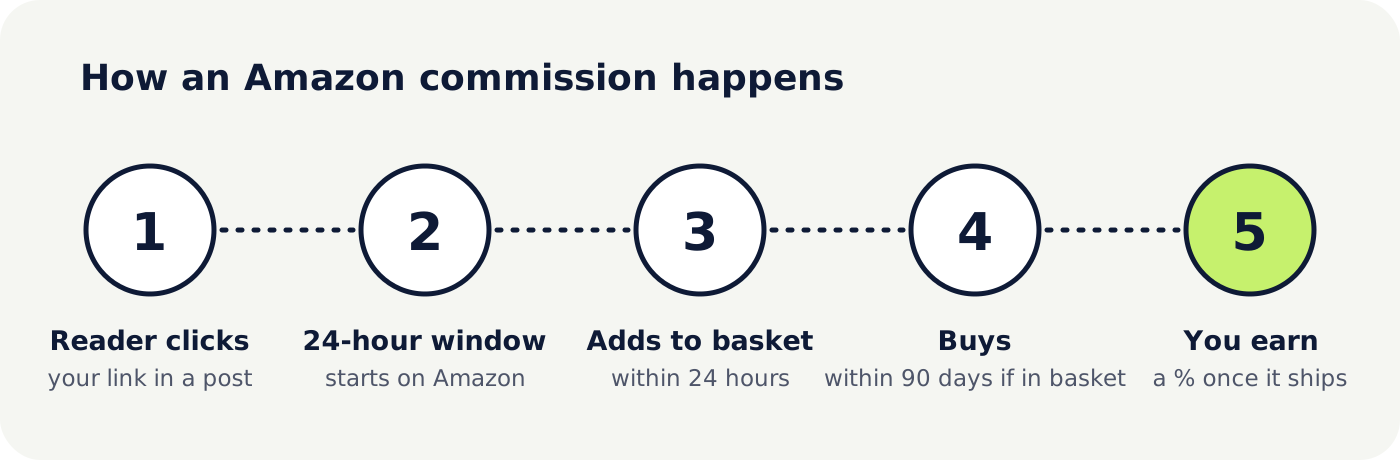
- The 24-hour window: you have 24 hours to earn a commission once your visitor clicks an affiliate link. If they add an item to their basket within that 24 hours, you can still earn if they buy it within 90 days.
- It’s the whole basket: you earn on qualifying items they buy in that window, not just the product you linked to.
- Commission is paid on what sticks: returned products don’t earn commission, and anything already credited is deducted from future earnings.
Commission rates: why you need volume
In the UK, Amazon’s commission rates range from 1% to 10% depending on the category. Luxury beauty sits at the top, most home, kitchen and garden categories pay 3 to 4.5%, and low-margin categories like grocery pay 1 to 2%.
That means each sale earns you pennies to a few pounds. Here’s an illustration:
| Assumption | Example |
|---|---|
| Average basket | £30 |
| Commission rate | 4% |
| Earnings per sale | £1.20 |
| Sales needed for £100 a month | about 84 |
| If 5% of people who click buy | about 1,700 clicks a month |
| If 10% of readers click a link | about 17,000 readers a month |
These numbers vary hugely by niche and content, but the lesson is clear: Amazon income comes from volume. It’s a slow build, usually alongside growing your traffic through search.
Good to know: Because Amazon pays low percentages, many sites pair it with higher-paying programmes, such as referral schemes or software affiliates, that pay more per sign-up.
How to sign up (UK)
- Get your platform ready first. Amazon reviews your site before approving you, and thin sites with little content are often rejected. Having 10 to 15 genuinely useful posts published before applying is a sensible target.
- Go to affiliate-program.amazon.co.uk and sign in with your Amazon account (or create one).
- Add your website, app or social profiles, and describe what your site covers and how you’ll send visitors.
- Verify your identity and set up your payment and tax details.
- Make your first sales. To stay in the programme, you must make three qualifying sales within your first 180 days. Sales to yourself don’t count.
- Add Amazon’s disclosure. Amazon requires a statement on your site such as “As an Amazon Associate I earn from qualifying purchases.” UK advertising rules also require you to make clear which links are affiliate links.
What works (and what doesn’t)
Content that earns:
- Buying guides for specific needs: “the best lunchboxes for primary school kids”, not “the best products”.
- Honest reviews of things you actually own and use.
- Comparisons between two or three popular options.
- Resource pages listing the tools, books or gear you use and recommend.
Mistakes to avoid:
- Links in emails: Amazon’s rules don’t allow Associates links in emails, so don’t put them in your newsletter. Link to your blog post instead.
- Clicking your own links to buy, or asking friends and family to buy through them. It breaks the rules and can get your account closed.
- Showing prices in your text unless you use Amazon’s approved tools, as prices change constantly.
- Hiding that links are affiliate links. Always disclose.
Measure it, so you can manage it
Amazon’s reports show clicks, orders and earnings by link. Once a month, check which posts drive clicks and which convert into sales. Update your best performers, and write more posts like them.
The short version
Amazon Associates is free and easy to join, and readers trust Amazon, but commission rates are low and the cookie lasts just 24 hours. That means income comes from volume: lots of useful, buyer-focused content over time. Build your site first, sign up at affiliate-program.amazon.co.uk, make three sales in your first 180 days, disclose every link, and keep Amazon links out of emails.
Common questions
Is the Amazon affiliate programme free to join?
Yes. There's no fee to join Amazon Associates. Be wary of anyone who asks you to pay to set it up for you.
Do I need a website to join Amazon Associates?
You need an online platform, such as a website, blog, YouTube channel or social media account. Amazon asks for it when you apply and reviews it against their rules.
Can I put Amazon affiliate links in my email newsletter?
No. Amazon's operating agreement doesn't allow Associates links in emails. Keep them on your website or other approved platforms, and link to those from your newsletter instead.
When does Amazon pay affiliates?
Amazon typically pays around 60 days after the end of the month in which the commission was earned, once you reach the minimum payment threshold.
This article is general information, not personal financial advice. Your situation is your own, so check the details for yourself or speak to a regulated adviser before making big decisions. Where investments are mentioned, their value can go down as well as up.