When our children are small, it’s easy to think saving for them can wait until money feels less tight. But when it comes to long-term saving, when you start matters more than how much you start with. That’s the compound effect, and a Junior ISA is one of the simplest ways to put it to work for your child.
What is a Junior ISA?
A Junior ISA (JISA) is a tax-free savings or investment account for a child under 18. There’s no tax on interest, dividends or growth inside it, and the money is locked away until your child’s 18th birthday.
The key rules for 2026/27:
- Allowance: up to £9,000 per child per tax year. The government has said it will stay at £9,000 until the end of the 2030/31 tax year.
- Who can pay in: anyone can contribute: parents, grandparents, aunts, uncles, family friends. Only a parent or legal guardian can open the account.
- Types: a child can have one cash Junior ISA and one stocks and shares Junior ISA, with the £9,000 shared between them.
- Use it or lose it: unused allowance doesn’t carry over to the next tax year.
- Separate from your own ISA: paying into your child’s Junior ISA doesn’t reduce your own adult ISA allowance.
Good to know: From 16, your child can take over managing their Junior ISA, but they can’t withdraw the money until they turn 18.
The compound effect, in one chart
Compounding means your money earns growth, and then that growth earns growth too. The longer it runs, the more the growth snowballs.
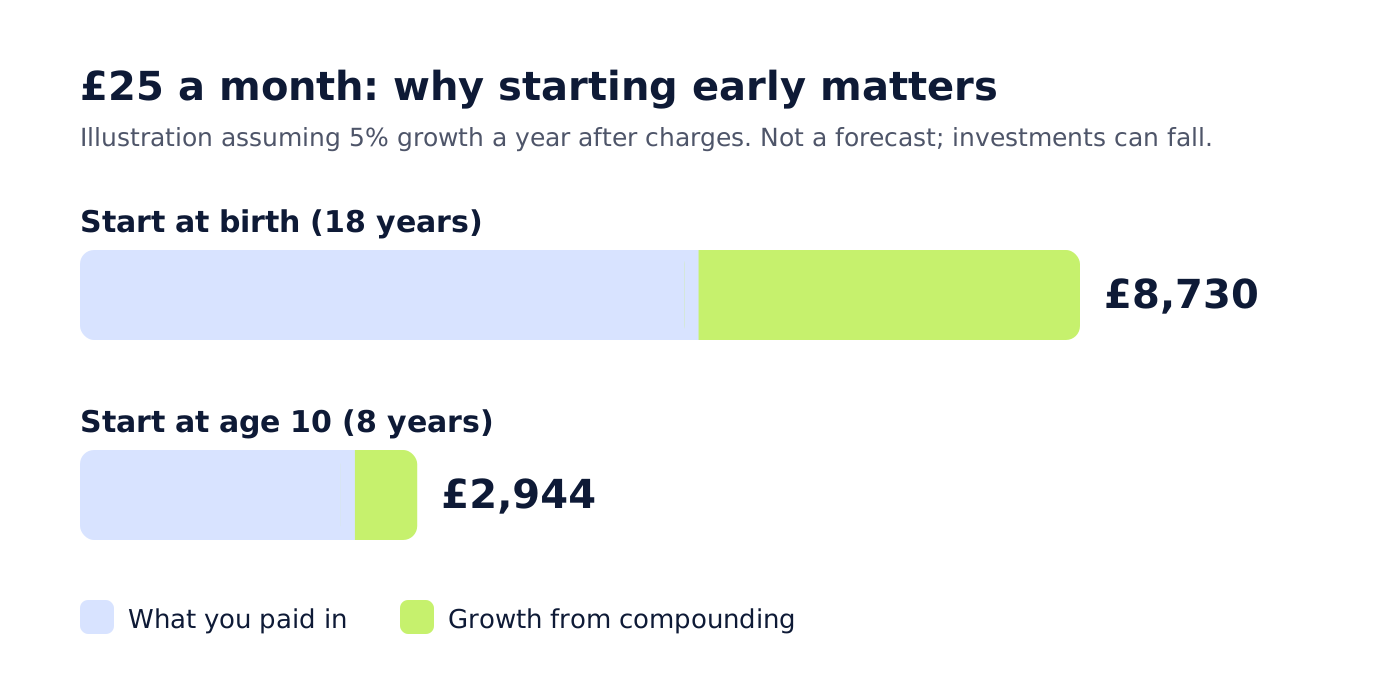
Here’s an illustration. Say you pay £25 a month into a stocks and shares Junior ISA and it grows by 5% a year after charges:
| Start at birth | Start at age 10 | |
|---|---|---|
| Monthly contribution | £25 | £25 |
| Years of saving | 18 | 8 |
| Total paid in | £5,400 | £2,400 |
| Growth | £3,330 | £544 |
| Value at 18 | about £8,730 | about £2,944 |
Starting eight years earlier costs you £3,000 more in contributions, but the pot ends up nearly three times bigger. Double it to £50 a month from birth and the illustration reaches about £17,460.
These figures are for illustration only. Returns aren’t guaranteed, and a stocks and shares Junior ISA can fall in value as well as rise. But the principle holds: time in the market does most of the heavy lifting.
Cash or stocks and shares?
| Cash Junior ISA | Stocks and shares Junior ISA | |
|---|---|---|
| Risk | Low: the balance won’t fall | Higher: values go up and down |
| Growth | Interest, tax-free | Investment growth, tax-free |
| Suits | Shorter timeframes or low risk appetite | Long timeframes, e.g. starting when your child is young |
With 10 or more years to go, many parents choose stocks and shares for the long-term growth potential, often in a low-cost global index fund. As your child nears 18, you might move some into cash so a market fall doesn’t hit just before they need it. If you’re unsure, a regulated financial adviser can help.
How to make small contributions count
- Automate it. Set up a monthly direct debit, even £10 or £25. Like any habit, consistency beats size.
- Invite family to contribute. Instead of more toys, some families ask grandparents to add to the Junior ISA for birthdays and Christmas. Most providers can give you details to share.
- Top up windfalls. Put in a share of any bonus, tax refund or gift money.
- Watch the fees. On small balances, a flat monthly fee can eat into growth. Compare the charges before choosing a provider.
- Review once a year. Check the balance, the fees and whether the investment choice still fits the time left.
Before you start
A Junior ISA works best alongside your own financial safety net. If you don’t have an emergency fund yet, it’s worth building one first, because the money in a Junior ISA is locked away until 18. Our guide on why your emergency fund should be in cash explains how.
It’s also worth thinking early about the 18th birthday. The money becomes theirs outright, so talking to your child about money as they grow up is just as valuable as the pot itself.
The short version
A Junior ISA lets you save or invest up to £9,000 a year for your child, tax-free, until they turn 18. Anyone can pay in, and it doesn’t affect your own ISA allowance. The biggest advantage you can give it is time: £25 a month from birth can grow to nearly three times as much as starting at 10. Start small, automate it, and let compounding do the rest.
Common questions
Can grandparents and friends pay into a Junior ISA?
Yes. Only a parent or legal guardian can open one, but anyone can pay in, as long as the total from everyone stays within the £9,000 annual limit.
Does paying into my child's Junior ISA reduce my own ISA allowance?
No. The Junior ISA allowance belongs to your child and is completely separate from your own £20,000 ISA allowance.
What happens when my child turns 18?
The account automatically becomes an adult ISA in their name, and the money is legally theirs to use as they choose. It's worth talking about money with them well before then.
Should I choose a cash or stocks and shares Junior ISA?
It depends on how long there is until your child turns 18 and how comfortable you are with risk. Over long periods, investing has historically grown faster than cash, but values can fall. With less time to go, cash may be more suitable. You can have one of each.
This article is general information, not personal financial advice. Your situation is your own, so check the details for yourself or speak to a regulated adviser before making big decisions. Where investments are mentioned, their value can go down as well as up.