An emergency fund has one job: to be there, in full, on the day something goes wrong. The boiler breaks, the car fails its MOT, or your income suddenly stops. That’s why the where matters just as much as the how much.
If you’re just getting started, our step-by-step guide on building an emergency fund when money feels tight covers the saving part. This post is about why that money belongs in cash.
The job of an emergency fund is certainty, not growth
It’s tempting to think money sitting in savings is “lazy”, and that it should be invested to grow. For long-term goals, that’s often true. But an emergency fund isn’t a long-term goal. It’s insurance, and insurance needs to pay out reliably.
Cash gives you three things nothing else does:
- Certainty: £3,000 in savings is still £3,000 next Tuesday.
- Speed: you can move it to your current account the same day or the next.
- No strings: no selling, no penalties, no interest to repay.
Why not investments?
Stock markets rise over the long term, but they can fall sharply in the short term. The problem is that emergencies and market falls often arrive together. During a downturn, jobs are less secure, so the moment you might need your emergency fund could be the moment your investments are worth less.
Selling at that point turns a temporary fall into a permanent loss. An emergency fund in cash means you never have to make that choice.
Why not a credit card or overdraft?
Borrowing can cover an emergency, but it turns a one-off cost into an ongoing one. A £1,000 car repair on a credit card, paid off slowly, can end up costing far more than £1,000 once interest is added. It also adds stress when you’re already dealing with a problem.
A cash buffer means the emergency costs exactly what it costs.
Why not a fixed-term account?
Fixed-rate savings accounts often pay more, but your money is locked in for the term. Some don’t allow withdrawals at all; others charge a penalty. That’s great for money you’re sure you won’t need, but it defeats the purpose of an emergency fund.
Where to keep it
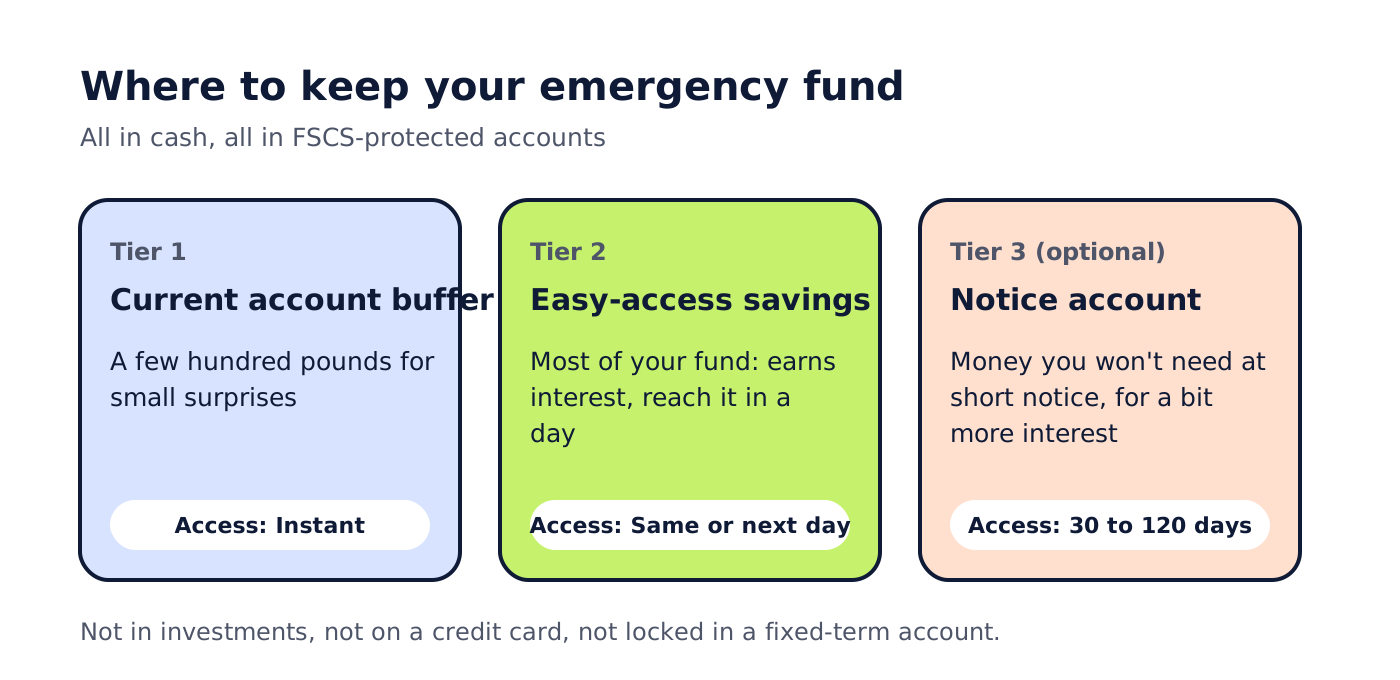
A simple setup many people use:
| Tier | Where | How much | Why |
|---|---|---|---|
| 1 | Current account buffer | A few hundred pounds | Covers small surprises instantly |
| 2 | Easy-access savings or easy-access Cash ISA | Most of your fund | Earns interest, reachable in a day |
| 3 (optional) | Notice account | A portion you won’t need at short notice | A little more interest, with 30 to 120 days’ notice |
Whatever you choose, check that the account is protected by the Financial Services Compensation Scheme (FSCS). Since 1 December 2025, FSCS protects up to £120,000 per person, per banking licence, if a UK bank, building society or credit union fails.
Good to know: Some banking brands share a licence, which means they share one £120,000 limit. The FSCS website has a free checker that shows which brands are covered together.
Keep it separate, and name it
Keep your emergency fund in a different account from your everyday money, ideally at a different bank. You’ll be less tempted to dip into it, and it’s clear at a glance whether your safety net is intact. Many banking apps let you name an account or savings pot: calling it “Emergency fund” is a small nudge that works.
Measure it, so you can manage it
Add your emergency fund to your weekly money check-in. Once a month, ask two questions: is the balance where it should be, and has my essential spending changed? If your rent or bills have gone up, your target should too.
The short version
An emergency fund is insurance, so it needs to be certain and instantly available. Keep it in cash: a small buffer in your current account and most of it in FSCS-protected easy-access savings, not in investments, on a credit card, or locked in a fixed-term account. Check your target as your costs change, and top it back up after you use it.
Common questions
How much should I have in my emergency fund?
A common guide is three to six months of essential spending: housing, bills, food, travel and minimum debt payments. If that feels far away, start with a first goal of £500 or £1,000.
Can I keep my emergency fund in a Cash ISA?
Yes, as long as it's an easy-access Cash ISA. That way you get tax-free interest and can still reach the money quickly. Avoid fixed-rate Cash ISAs for your emergency fund, because you may not be able to withdraw early.
What about Premium Bonds?
Premium Bonds from NS&I are backed by the Treasury and you can usually cash them in within a few working days. But instead of interest you get the chance of prizes, so what you earn isn't predictable. Some people keep part of their emergency fund in them.
Isn't cash losing value to inflation?
It can, which is why you shouldn't keep more in cash than you need for emergencies and short-term goals. For your emergency fund, though, certainty matters more than growth.
This article is general information, not personal financial advice. Your situation is your own, so check the details for yourself or speak to a regulated adviser before making big decisions. Where investments are mentioned, their value can go down as well as up.