Pension tax relief is one of the most generous perks in the UK tax system, and one of the most commonly missed. If you’re a higher-rate taxpayer, you may be owed money you’ve never claimed. Here’s how it works.
This is general information, not financial advice. Figures are for England, Wales and Northern Ireland; Scotland’s rates differ.
The basic idea
When you pay into a pension, the government gives you back the Income Tax you paid on that money. How you get it depends on how your pension is set up.
The three ways relief is given
| Method | How it works | Do higher-rate taxpayers need to claim? |
|---|---|---|
| Relief at source | You pay from taxed pay; your provider adds 20% basic-rate relief | Yes, the extra 20% or 25% must be claimed |
| Net pay | Your employer takes contributions before tax is calculated | No, you get full relief automatically |
| Salary sacrifice | You give up salary and your employer pays it into your pension | No, and you save National Insurance too |
Relief at source is used by SIPPs, personal pensions and many workplace schemes. It’s where higher-rate taxpayers most often lose out.
How much extra can you claim?
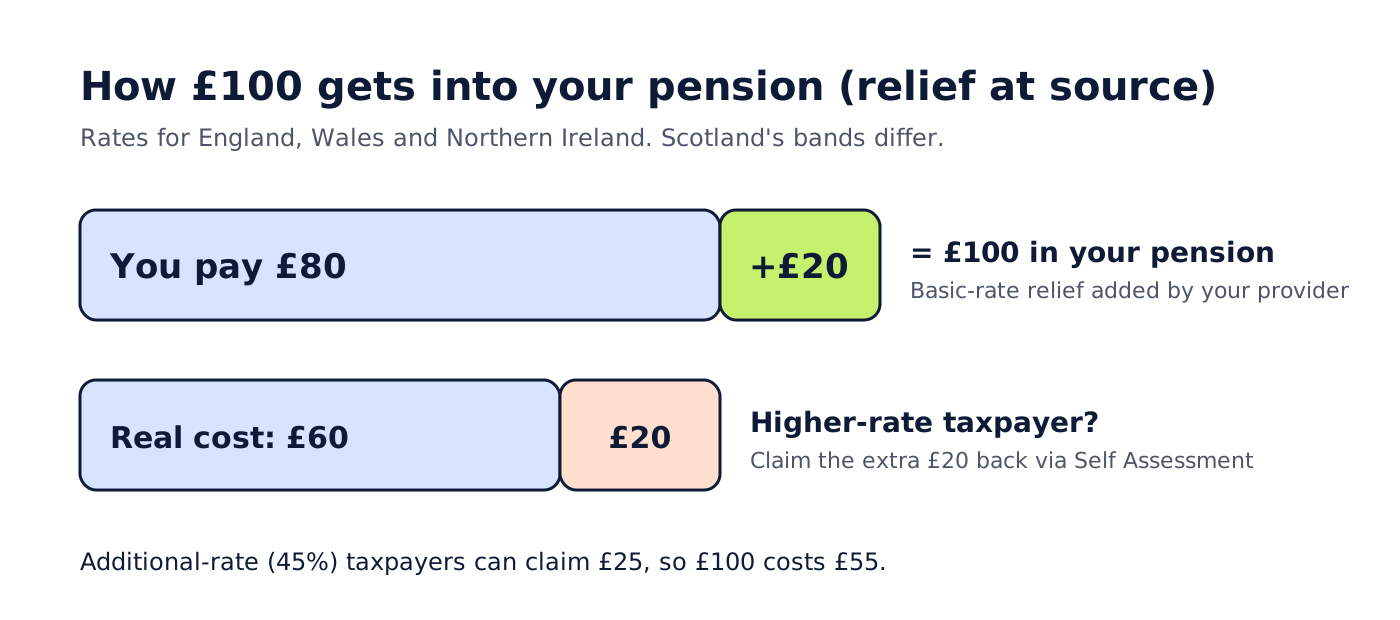
With relief at source, your provider automatically adds basic-rate relief: every £80 you pay becomes £100 in your pension. But if you pay 40% tax, you’re entitled to another 20% of the gross contribution:
- Higher-rate (40%) taxpayer: claim an extra £20 per £100, so £100 in your pension costs you £60
- Additional-rate (45%) taxpayer: claim an extra £25, so it costs you £55
Relief applies on contributions up to the amount of your income taxed at the higher rate. If only part of your income is in the higher-rate band, you get the extra relief on that part.
How to claim it
If you file a Self Assessment tax return:
- Find the total you paid into relief-at-source pensions during the tax year. Your provider’s annual statement will show it.
- Enter the gross amount (what you paid plus the basic-rate relief added) in the pension contributions section.
- HMRC works out the extra relief, which reduces your tax bill or increases your refund.
If you don’t file a Self Assessment return:
- Contact HMRC through your online personal tax account, or by phone or letter.
- Tell them how much you paid in. They’ll usually adjust your tax code for this year and can refund earlier years.
- If you pay in a lot, or your income is over £100,000, you may need to register for Self Assessment.
Good to know: You can usually claim for the previous four tax years. If you’ve been a higher-rate taxpayer with a SIPP for a while, it’s worth checking now.
Two powerful extras for higher earners
The £100,000 trap. Once your income goes over £100,000, you lose £1 of your £12,570 Personal Allowance for every £2 above it, creating an effective tax rate of around 60% on that slice. Pension contributions reduce your “adjusted net income”, so paying in more can restore your Personal Allowance. For some people it can also help keep tax-free childcare, which has a £100,000 income limit.
Salary sacrifice. If your employer offers it, you save Income Tax and National Insurance, and some employers share their NI saving with you. From April 2029, the National Insurance saving is due to be limited to the first £2,000 of sacrificed pay each year, but the Income Tax saving continues.
The short version
Pension contributions get tax relief at your highest rate of Income Tax. Basic-rate relief is added automatically, but with relief-at-source pensions, higher-rate and additional-rate taxpayers must claim the extra themselves, through Self Assessment or by contacting HMRC. Check how your pension works, claim what you’re owed, and backdate for up to four years. For more on pensions in general, read pensions explained.
Common questions
How do I know if my pension uses relief at source?
Check your payslip and pension statements. If your contribution is taken from your pay after tax, and your provider adds a 'tax relief' amount to your pot, it's relief at source. SIPPs and many personal pensions work this way. If you're unsure, ask your pension provider or HR.
I don't do a Self Assessment tax return. Can I still claim?
Yes. If you don't normally file a return, you can usually ask HMRC to adjust your tax code or refund you, by contacting them online or by phone. If you already file a return, add your pension contributions to it.
How far back can I claim?
You can usually claim for the previous four tax years. It's worth checking if you've been a higher-rate taxpayer paying into a relief-at-source pension for a while.
Does this work the same in Scotland?
Scotland has different Income Tax bands and rates, so the amount of extra relief is different, and some intermediate-rate taxpayers can also claim. HMRC's guidance for Scottish taxpayers explains the details.
This article is general information, not personal financial advice. Your situation is your own, so check the details for yourself or speak to a regulated adviser before making big decisions. Where investments are mentioned, their value can go down as well as up.