This post contains an affiliate or referral link. If you use it, we may receive a commission or reward at no extra cost to you. How this works.
Switching from petrol to electric is one of the biggest changes to a household’s running costs, and one of the most confusing. Grants, tariffs, charger installs, range anxiety and battery worries all come up at once. Here’s a plain-English guide to what actually matters, and how to measure whether an EV makes sense for you.
A quick note: I’m an Octopus Energy customer, and the Octopus links in this post are my referral link. If you switch through it, you get £50 credit and so do I, at no cost to you.
1. The upfront cost
New EVs usually still cost more to buy than an equivalent petrol car, though the gap is narrowing and the used market is growing fast.
- Electric Car Grant: the government’s grant offers discounts of up to £3,750 on eligible new electric cars, and it has been extended to 31 March 2030. Not every model qualifies, so check the eligible list on GOV.UK.
- Used EVs can be much cheaper than new, but it’s especially important to check the battery (see section 6).
- Salary sacrifice: if your employer offers an EV scheme, it can reduce the cost significantly thanks to low company car tax on EVs.
2. Running costs: where EVs shine
Fuel is where the savings add up, as long as you can charge at home.
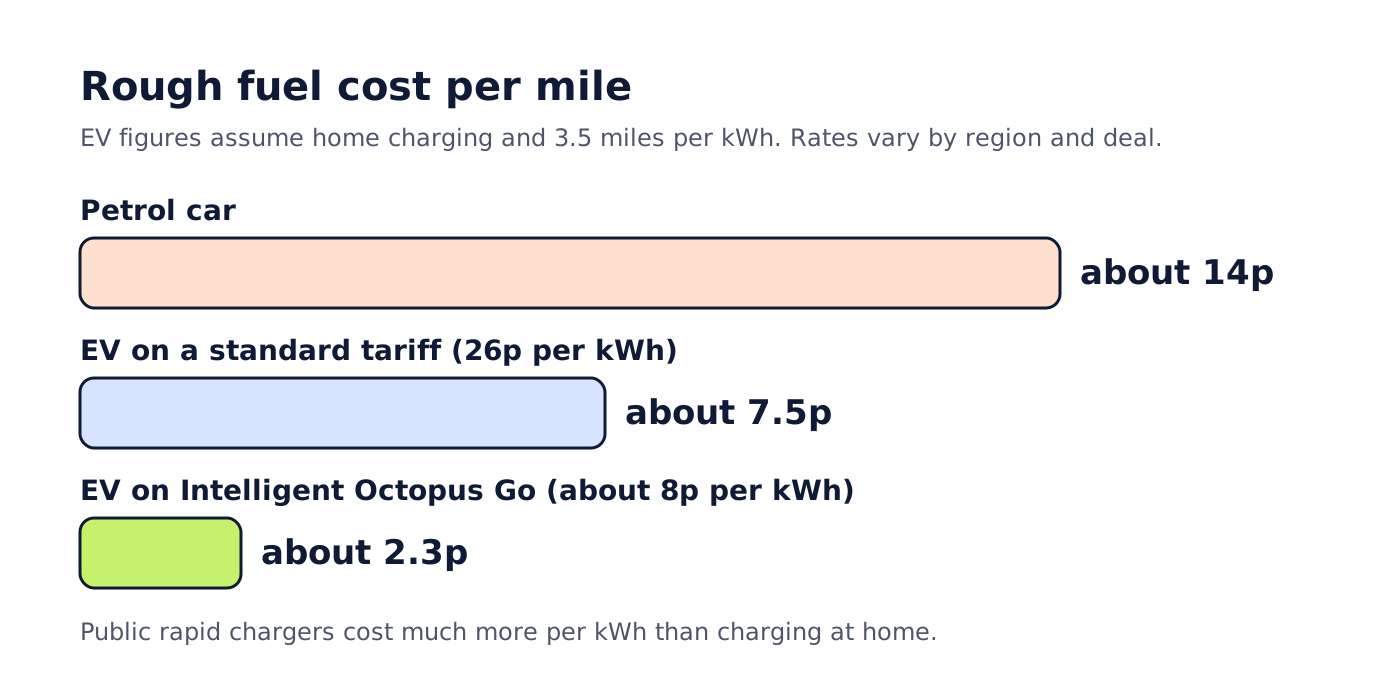
The maths is simple: divide your electricity price by how many miles your car does per kWh. At a typical 3.5 miles per kWh:
| How you charge | Price per kWh | Cost per mile |
|---|---|---|
| Home, standard tariff | about 26p | about 7.5p |
| Home, Intelligent Octopus Go off-peak | about 8p | about 2.3p |
| Public rapid charger | much higher | can match or exceed petrol |
For comparison, a typical petrol car costs roughly 14 to 15p per mile in fuel. Servicing is usually cheaper too, as there’s no oil to change and far fewer moving parts. Insurance, though, can be higher, so get quotes before you commit.
3. Tax: EVs now pay their way
The days of free road tax for EVs are over:
- Vehicle Excise Duty: new EVs pay £10 in their first year, then £200 a year. EVs with a list price over £50,000 pay the Expensive Car Supplement too, taking the total to £640 a year for five years.
- Pay-per-mile from 2028: from April 2028, electric car drivers are due to pay a road charge of 3p per mile. For someone driving 8,000 miles a year, that’s about £240 a year.
Even with these, most home-charging drivers still pay far less per mile than with petrol, but include them in your sums.
4. Home charging and installation
If you have off-street parking, a home charger is the single biggest factor in making an EV cheap and convenient.
- Check your parking: you’ll need a driveway or garage where the car can sit next to the charger.
- Get quotes from approved installers. A standard 7kW charger installation often costs around £800 to £1,200, more if your fuse box or wiring needs upgrading.
- Choose a smart charger that works with the energy tariff you want (see below).
- Check for grants if you live in a flat or rent. Government support for chargepoint installation has been aimed at these groups, so check GOV.UK for what’s available now.
5. Choosing an EV tariff: Octopus Intelligent Go
A time-of-use tariff lets you charge overnight when electricity is cheap. Octopus Energy has two main options:
| Intelligent Octopus Go | Octopus Go | |
|---|---|---|
| Cheap window | About 6 hours, typically 11:30pm to 5:30am | 5 hours, 00:30 to 05:30 |
| Off-peak rate | Around 8p per kWh (varies by region) | A little higher |
| Charging | Octopus schedules it automatically | You set a timer on your car or charger |
| Needs | Smart meter plus a compatible car or charger | Smart meter plus any EV charger |
With Intelligent Octopus Go, the cheap overnight rate covers your whole home during the window, not just the car. So running the dishwasher or washing machine overnight saves money too.
Rates vary by region and change over time, so check the live Octopus EV tariff prices for your postcode before you decide.
Good to know: Intelligent Octopus Go only works with compatible cars and chargers. Check compatibility on Octopus’s website before you buy a charger.
6. Range: what to really expect
The official range figure (WLTP) is measured in ideal conditions. In real life, expect less, especially:
- In cold weather, when batteries are less efficient and you’re using the heater
- On motorways, where higher speeds use more energy
- With a full car or a roof box
A good rule of thumb is to plan around 70 to 80% of the official figure in winter. For most people, daily driving is well within range and the car is charged overnight at home. Longer trips need a little planning around public rapid chargers, and apps make this much easier than it used to be.
7. Battery health: the question everyone asks
Batteries are the most expensive part of an EV, so it’s natural to worry. The reality is reassuring:
- Degradation is gradual. Batteries lose a little capacity over the years, not all at once.
- Warranties are long. Most manufacturers offer a battery warranty of around eight years, usually with a minimum capacity guarantee. Check the exact terms for your model.
- Buying used? Ask for a battery health report (sometimes called a state of health or SoH check) before you buy.
- Look after it: for everyday driving, many manufacturers recommend charging to around 80% and avoiding leaving the battery at 100% or near-empty for long periods. Check your car’s manual.
Measure it before you switch
The Compound Story approach: measure it so you can manage it. Before you decide, work out:
- Your current annual fuel cost (last few months’ fuel spend × 12)
- Your annual mileage (from your MOT history or service records)
- Your likely EV electricity cost: annual miles ÷ 3.5 × your off-peak rate
- The tax, insurance and finance or purchase differences
If the numbers work, the next step is a tariff that makes home charging cheap. Get an Octopus quote using my referral link and you’ll get £50 credit on your account once you switch.
The short version
EVs cost more upfront, but charging at home on a smart tariff can bring fuel costs down to a few pence a mile. EVs now pay road tax, and a pay-per-mile charge is due from April 2028, so include both in your sums. If you have off-street parking, a home charger and a tariff like Intelligent Octopus Go make the biggest difference. Expect less range in winter, and check battery health when buying used.
Common questions
Do I need a home charger to own an EV?
Not strictly, but it makes a huge difference to cost and convenience. Relying only on public rapid chargers can cost as much per mile as petrol. If you have off-street parking, a home charger is usually worth it.
How much does a home charger cost to install?
Prices vary with the charger and your home's wiring. A standard installation often costs somewhere around £800 to £1,200, but get quotes from approved installers, as extra electrical work can add to it.
What is Intelligent Octopus Go?
It's Octopus Energy's smart EV tariff. It gives you a cheap electricity rate for a six-hour overnight window, typically around 11:30pm to 5:30am, and schedules your car's charging automatically. You need a smart meter and a compatible car or charger.
How long do EV batteries last?
Most modern EV batteries are designed to last many years and lose capacity gradually rather than suddenly. Most manufacturers offer a battery warranty of around eight years. When buying used, ask for a battery health report.
This article is general information, not personal financial advice. Your situation is your own, so check the details for yourself or speak to a regulated adviser before making big decisions. Where investments are mentioned, their value can go down as well as up.