This post contains an affiliate or referral link. If you use it, we may receive a commission or reward at no extra cost to you. How this works.

Willpower is a terrible financial plan. It runs out at the end of a long week, on payday, or when something shiny appears in your feed. Systems don’t run out. Set them up once and they keep working whether you’re motivated or not.
Here are the three systems I think everyone should build. Together they take an afternoon to set up, and then they mostly run themselves.
A quick note: the Monzo and Trading 212 links in this post are my referral links. If you sign up through them, we could both get a bonus.
System 1: The payday autopilot
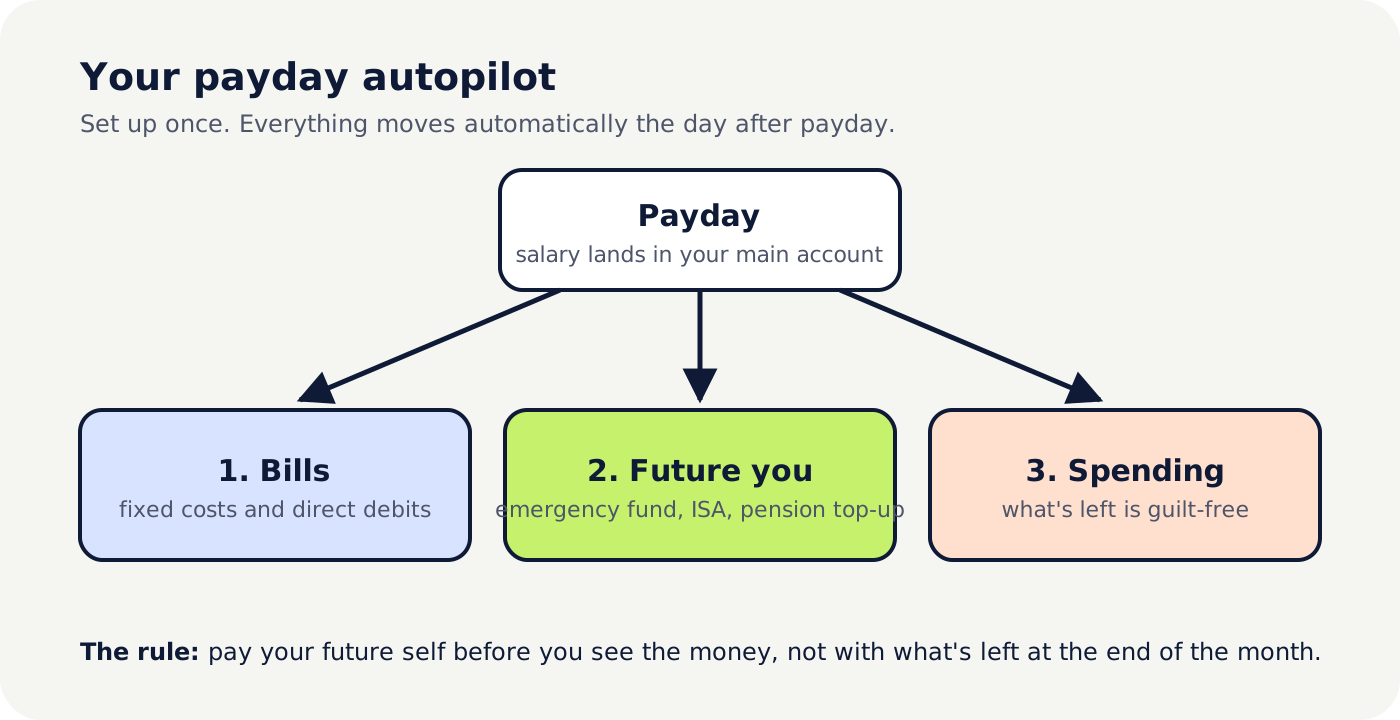
The most powerful money habit is to pay your future self first: move money to savings and investments before you see it, not with whatever is left at the end of the month.
How to set it up:
- Add up your fixed monthly bills: rent or mortgage, council tax, energy, insurance, subscriptions.
- Decide on a savings amount, even a small one to start.
- Set up automatic transfers for the day after payday: bills money to a bills account or pot, savings to your savings, and investing to your ISA or pension.
- Whatever is left in your main account is genuinely yours to spend, guilt-free.
With Monzo, Salary Sorter can split your pay across pots the moment it lands. With any bank, a few standing orders do the same job.
Good to know: Every time your pay goes up, raise your savings transfer by at least half of the increase before you get used to spending it. Your lifestyle still improves, and so does your future.
System 2: Bills and sinking funds
Most “unexpected” costs aren’t unexpected at all. Car servicing, Christmas, birthdays, school trips, the TV licence, holidays: we know they’re coming, just not always when.
A sinking fund turns these into planned costs:
| Cost | Yearly amount | Save monthly |
|---|---|---|
| Christmas and birthdays | £900 | £75 |
| Car service, MOT and tyres | £600 | £50 |
| Holiday | £1,800 | £150 |
| Home repairs | £600 | £50 |
(Figures are examples; use your own.)
Set up a pot or savings space for each, add the monthly amount to your payday autopilot, and when the bill arrives, the money is already waiting. No credit card, no stress. This works alongside your emergency fund, which covers genuinely unexpected costs.
System 3: Automatic investing
Once your bills and short-term savings are handled, the third system builds long-term wealth:
- Make the most of your workplace pension, especially any employer matching. That’s free money. Read how to get more from your workplace pension.
- Automate a monthly amount into a Stocks and Shares ISA, invested in a low-cost, diversified fund. On Trading 212, AutoInvest does this for you each month.
- Don’t touch it. Review once or twice a year.
Automatic investing removes the two biggest mistakes investors make: forgetting to invest, and trying to time the market. (Capital at risk: investments can go down as well as up.)
Measure it, so you can manage it
Systems still need a quick check-in. A 15-minute weekly money check-in confirms the transfers happened, and a yearly review adjusts the amounts as your life changes.
The short version
Build three systems once: a payday autopilot that pays your future self first, sinking funds that turn predictable costs into planned ones, and automatic investing into your pension and ISA. Tools like Monzo pots and Trading 212’s AutoInvest make it easy, but a few standing orders work too. Set it up this weekend, and let consistency do the rest.
Common questions
How much should I send to each part of the system?
Start with what's realistic. Cover bills first, then send even a small amount to savings, and increase it every time your pay rises. A common starting framework is 50% needs, 30% wants and 20% saving, but adjust it to your life.
What's a sinking fund?
It's money you save a little at a time for a cost you know is coming, like car servicing, Christmas or school uniforms. Dividing the yearly cost by 12 and saving that monthly means it's already there when the bill arrives.
Do I need multiple bank accounts for this?
Not necessarily. Banks with pots or 'spaces', like Monzo, let you separate money within one account. Some people prefer a separate bank for bills or savings to make it harder to dip in.
This article is general information, not personal financial advice. Your situation is your own, so check the details for yourself or speak to a regulated adviser before making big decisions. Where investments are mentioned, their value can go down as well as up.